
Stanton County Criminal Court Records
A criminal court record is the case-level record held by the court after charges are filed. In Stanton County, criminal matters are handled in the Stanton County District Court, which is part of the 26th Judicial District. The court page says it manages criminal cases along with civil, probate, juvenile, traffic, and small claims matters. The Clerk of the District Court is the local record custodian for the case file, while the County Attorney is the prosecutor who files or pursues felony, misdemeanor, juvenile, mental illness, and traffic cases.
A criminal case-file lookup is not the same as an arrest log. The arrest or custody side begins with law enforcement and the sheriff. The criminal court record begins when a case opens in court and then tracks charge status, hearings, pleas, dispositions, and sentence. For the narrower arrest-to-charge path, use Stanton County arrest records and court charges. For all case types, use the broader Stanton County court records access path.
The official County Attorney directory listing identifies Clint W. Floyd as Stanton County Attorney.
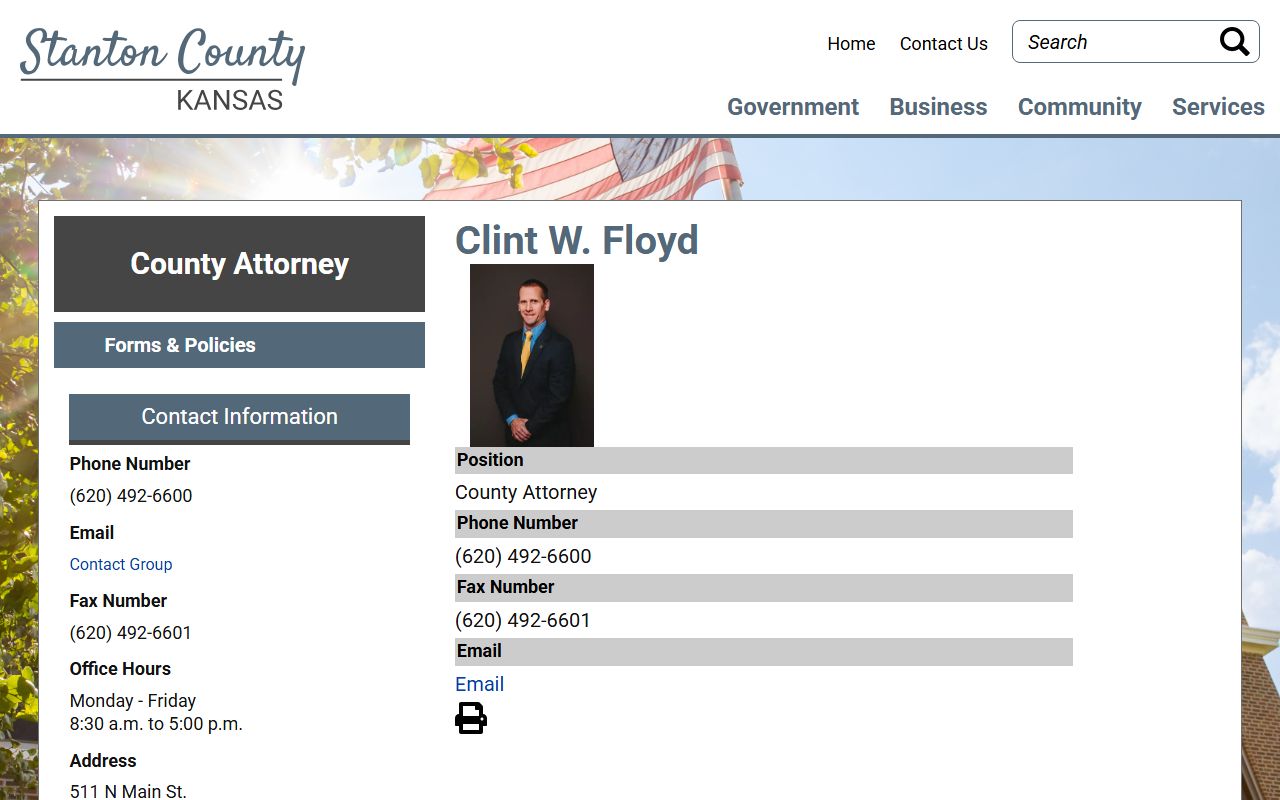
The County Attorney role is central because the prosecutor's filing decision is what moves a law-enforcement arrest toward a criminal court case.
Search Stanton County Criminal Court Records
Kansas CaseSearch is the main online search path for Stanton County criminal court records. Search by case number if available. If the case number is not known, search by the defendant's legal name. For traffic or criminal payments, the KSCourts Central Payment Center may show payable matters, but it is a payment/search channel and not a complete criminal case-file archive. A missing online result should be checked with the District Court Clerk, especially for older, sealed, expunged, juvenile, or nonpublic records.
- Open Kansas CaseSearch and search for the Stanton County criminal case by case number or defendant name.
- Confirm that the court is Stanton County District Court or the 26th Judicial District.
- Review the docket for first appearance, bond, arraignment, motions, plea, disposition, sentence, and payment entries.
- Check whether the case has diversion, probation, restitution, warrant, or failure-to-appear entries.
- Ask the Clerk of the District Court for certified copies or records not available through the public portal.
For statewide criminal-history checks outside the case docket, Kansas provides a separate criminal history record check portal. That portal is not the same as Stanton County's court file. KDOC KASPER, VINELink, and KBI registered offender search are also separate systems with separate purposes.
The Kansas criminal history portal is a statewide record-check channel, not the Stanton County District Court file.
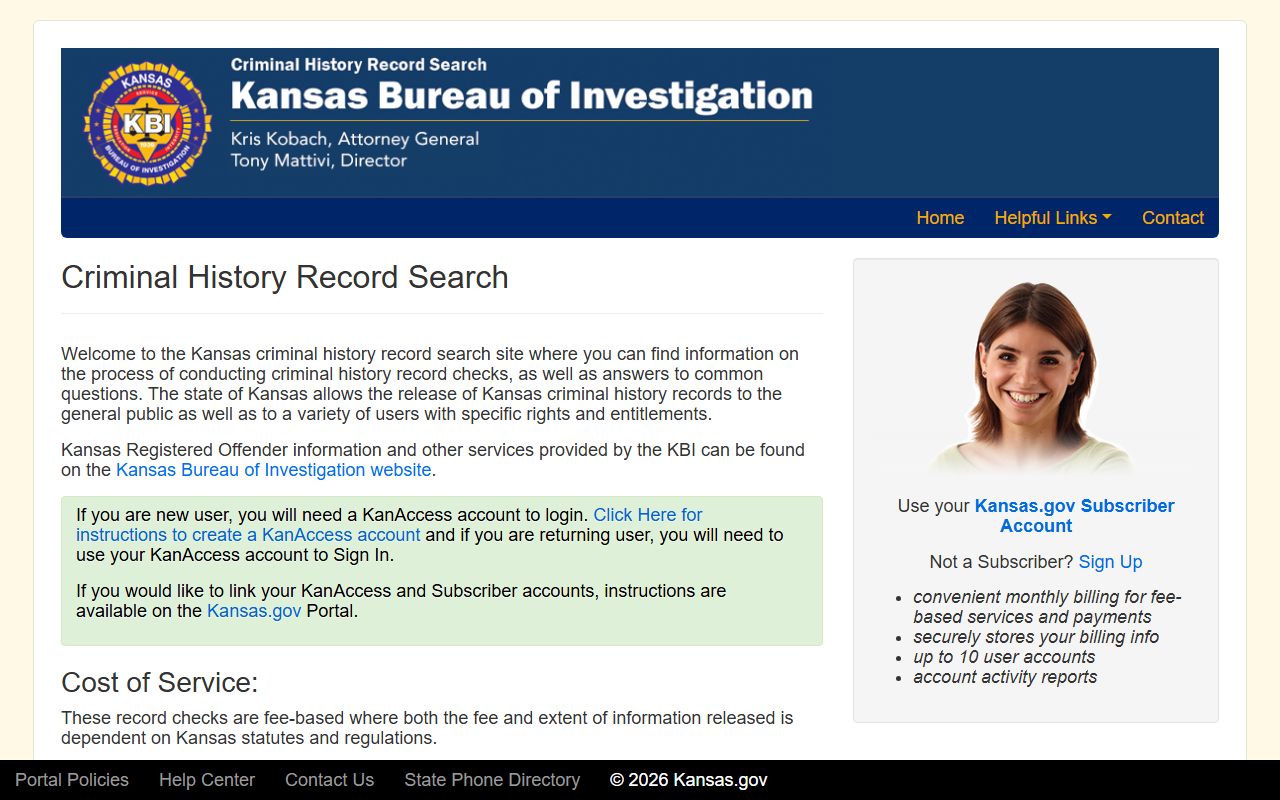
Use the criminal history portal for background-style record checks and CaseSearch or the clerk for case docket details.
Stanton County Criminal Case Stages
A Stanton County criminal court record grows as the case moves through court. The first entries may include the complaint or information, warrant or summons, bond, and first appearance. Later entries can show preliminary hearings, arraignment, motions, plea negotiations, diversion review, trial settings, verdict, disposition, sentence, probation, restitution, and costs. A single case may have more than one charge, and each charge may resolve in a different way.
Case flow: Charges Filed › First Appearance › Arraignment › Pretrial and Motions › Plea or Trial › Disposition › Sentencing
| Stage | What Happens |
|---|---|
| Charges Filed | The County Attorney files a complaint or information and the District Court opens or updates the criminal case. |
| First Appearance and Bond | The court addresses release conditions, bond, counsel, and the next hearing setting. |
| Arraignment | The defendant is formally advised of charges and enters a plea when the case reaches that stage. |
| Pretrial and Motions | Attorneys file requests, raise legal issues, and prepare for plea, diversion, or trial. |
| Plea or Trial | The charge may resolve by plea, trial verdict, dismissal, acquittal, or another court order. |
| Sentencing | The court may impose jail, prison, probation, fines, costs, restitution, or other conditions after conviction. |
What Stanton County Criminal Records Show
The criminal case file is field-driven. It can identify the defendant, court, case number, prosecutor, defense counsel, judge, charge list, docket entries, hearings, orders, plea, disposition, sentence, and financial obligations. Public online data may not show every document image. The clerk can explain how to request copies, while the court record itself controls the official case status. If the case is expunged or sealed, public search results may be limited or absent.
| Field | What It Shows |
|---|---|
| Case Number | The Kansas District Court identifier for the criminal case. |
| Defendant | The accused person's name when public. |
| Charges | Charge description, statute, offense level, amended charge, or dismissed charge when shown. |
| Attorney Fields | County Attorney, defense counsel, appointed counsel, or other attorney entries when public. |
| Hearings | First appearance, preliminary hearing, arraignment, pretrial, plea, trial, sentencing, or review dates. |
| Plea | Formal plea entry, plea agreement event, or trial result where recorded. |
| Disposition | Guilty, dismissed, acquitted, diverted, convicted, closed, or other result by charge or case. |
| Sentence | Jail, prison, probation, fines, costs, restitution, supervision, and related court conditions. |
| Restrictions | Juvenile, sealed, expunged, confidential, or redacted items may be missing from public view. |
Stanton County Charges vs Convictions
A charge is an accusation filed in court. A conviction is a final result based on a guilty plea, verdict, or other finding of guilt. A Stanton County criminal court record can show charges that are pending, amended, reduced, dismissed, diverted, or resolved by acquittal. Do not read a charge list as a conviction list. The disposition and sentence fields explain what happened to each charge.
| Point | Charge | Conviction |
|---|---|---|
| Meaning | A formal accusation filed by the prosecutor. | A final finding or admission of guilt. |
| Case Stage | Appears early and may change. | Appears after plea, verdict, or judgment. |
| Record Reading | Check status for amended, dismissed, or diverted charges. | Check sentencing, probation, fines, and restitution. |
| Public Limits | May be restricted if sealed, expunged, juvenile, or confidential. | May also be restricted after expungement or sealing. |
Diversion in Stanton County Criminal Records
The Stanton County Attorney page states that diversion may be an option for a person charged with an offense. The office links to a diversion policy and an electronic diversion form, and the county forms index lists a Diversion Application under the County Attorney. Diversion is not the same as a conviction. It is a prosecutor-approved program that may avoid a conviction if the person completes the required terms. The court record may still show the charge, diversion status, review dates, or dismissal after completion depending on case handling and public access rules.
The adult expungement statute addresses qualifying convictions, arrest records, and diversion agreements.
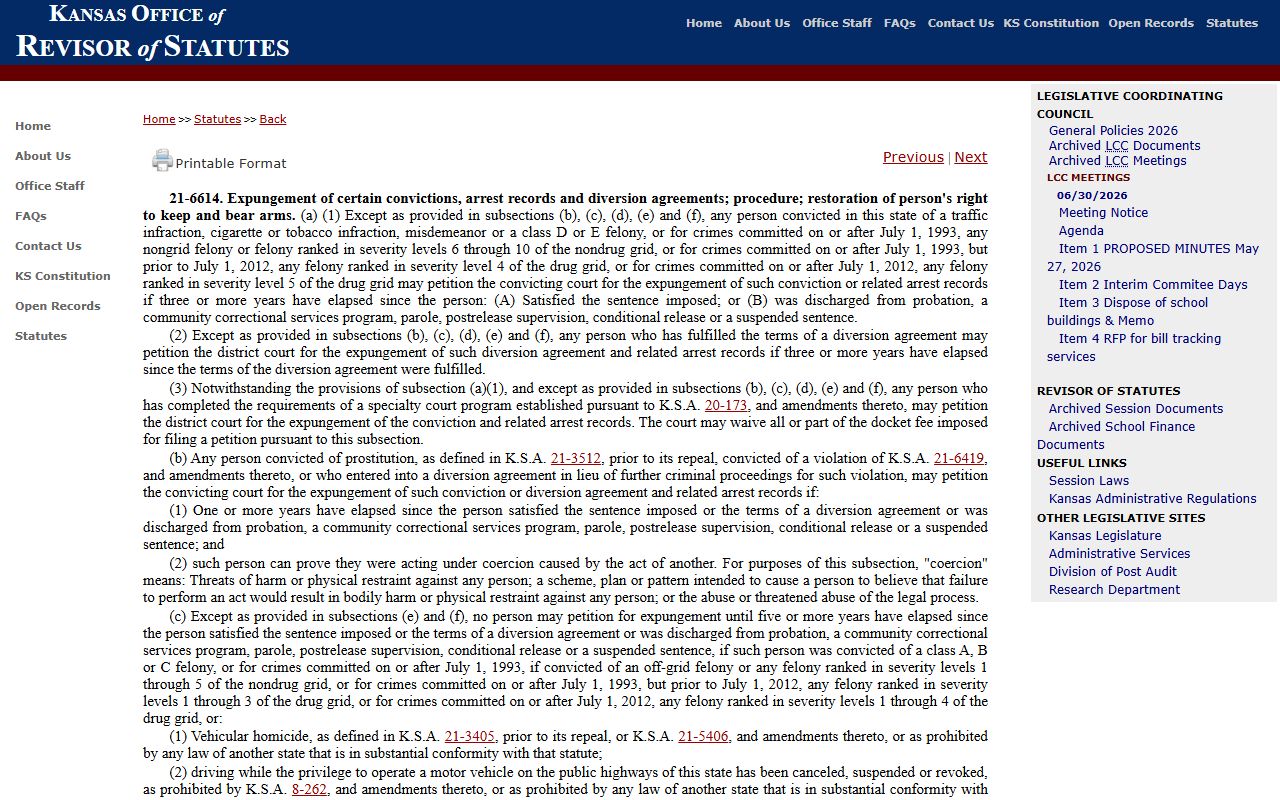
Because diversion can affect later public access, the docket should be read with any expungement or dismissal entries that follow.
Note: The County Attorney handles diversion questions, while the District Court Clerk handles case-file and docket access questions.
Sealed vs Expunged Criminal Records
Sealing and expungement both limit public access, but they are not the same thing. A sealed record is closed from public view by statute, rule, or court order. An expunged record is subject to a Kansas expungement order that limits public access to qualifying arrests, convictions, diversions, or juvenile matters. Neither process should be described as instant deletion from every system. Agencies may retain limited access as allowed by law.
| Point | Sealed | Expunged |
|---|---|---|
| Public Visibility | Closed from public view while the seal applies. | Limited from public access after a qualifying court order. |
| Common Basis | Confidential case type, court order, juvenile matter, or sensitive filing. | Adult conviction or diversion, arrest record, or juvenile record that meets Kansas law. |
| Kansas Law | Depends on the case type, court rule, and order. | K.S.A. 21-6614, K.S.A. 22-2410, or K.S.A. 38-2312 may apply. |
| Practical Step | Ask the clerk about access procedure, not case facts. | Identify the case and file the proper petition if eligible. |
The Kansas arrest-record expungement statute is a key source for arrest records tied to criminal court history.
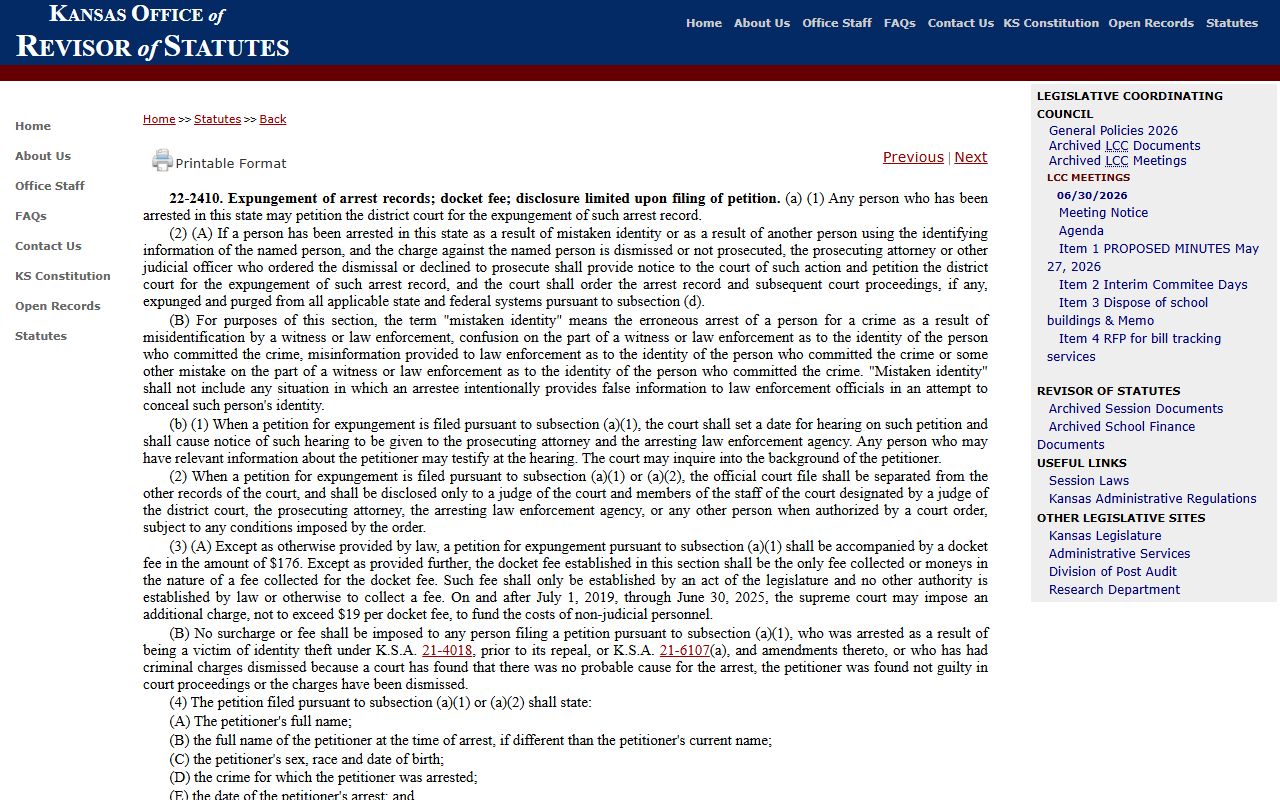
Use the arrest expungement statute for qualifying arrest-record questions and the court docket to identify the local case tied to the arrest.
The Kansas juvenile expungement statute applies to juvenile records, which are often restricted from broad public access.
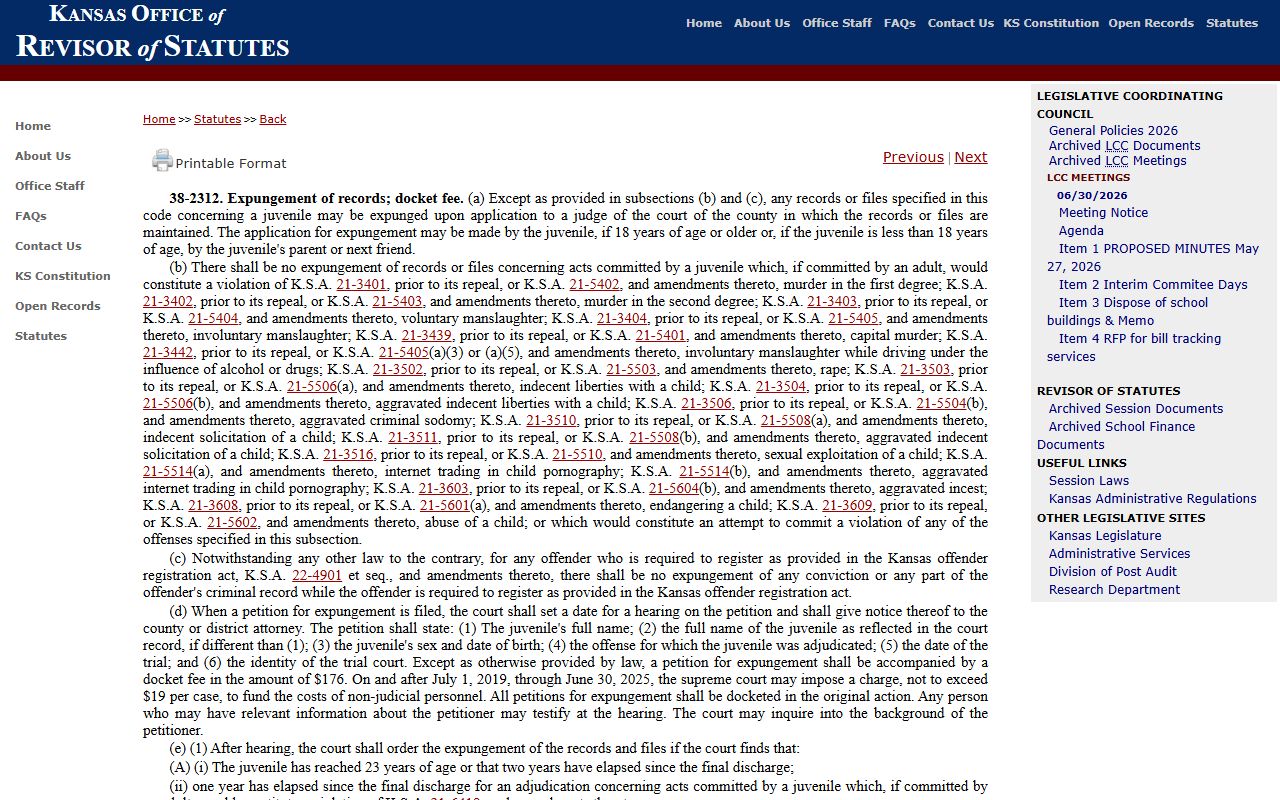
Juvenile records should not be treated like adult criminal court records because online and courthouse access rules are different.
Access Stanton County Criminal Records
Public access to Stanton County criminal court records is shaped by Kansas open-records law, Kansas Supreme Court electronic-access rules, and case-specific restrictions. Kansas Supreme Court Rule 22 controls public electronic access to district court records, so the public online result may be narrower than the courthouse file. KORA helps with county public records, but court records should begin with CaseSearch, the courthouse terminal, or the Clerk of the District Court.
Clerk of the District Court
Stanton County District Court
201 N Main St, Johnson, KS 67855
Mail: PO Box 913, Johnson, KS 67855
620-492-2180
Hours: Monday-Friday, 8:00 a.m.-noon and 1:00 p.m.-5:00 p.m.
Stanton County Attorney
511 N Main St
Johnson, KS 67855
(620) 492-6600
Hours: Monday-Friday, 8:30 a.m.-5:00 p.m.
Restricted Stanton County Criminal Records
Restricted criminal court records include juvenile matters, sealed cases, expunged records, confidential attachments, protected addresses, medical or mental-health details, Social Security numbers, financial account numbers, and some warrant materials. Active investigations can also affect sheriff or prosecutor records outside the court file. The research did not locate a Stanton County-specific public defender office page, so defendants should ask the court at first appearance or contact the court clerk for appointed-counsel procedure.
Background checks should not rely on a single docket entry. KASPER is for KDOC custody or supervision information and is not a complete criminal history. The KBI registered offender search is for registered sex, violent, or drug offenders, not ordinary Stanton County criminal cases. Kansas criminal history checks, court dockets, sheriff custody records, and offender registries each answer different questions.
Important: Court lookup results are not a consumer report and should not be used for FCRA-regulated decisions.